






Screen Habits May Be Affecting Your Sex Drive More Than You Think, According to a Sex Expert
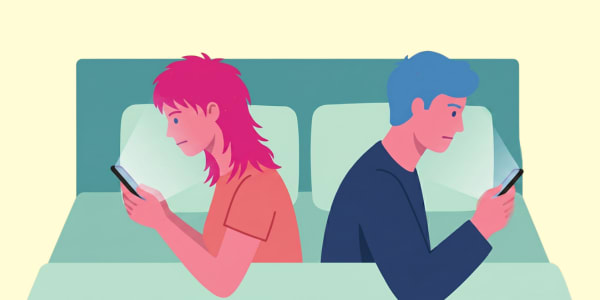
37% of US adults reported having sex weekly, down from 55% in 1990. Lisa Finn, Sex Expert at Babeland, shares 3 widespread screen habits that may, for many people, be quietly affecting desire.
1. Your Phone Is Competing For Your Attention
A single smartphone notification hijacks attention for up to 7 seconds, and across a full day those add up. Over 45% of Americans say their phone affects their libido, with searches for solutions hitting 500K.
Finn says, “Our phones are constantly competing for our attention. Seemingly endless notifications and screen time can keep the brain in a more stimulated and even stressed state, making it harder to relax into intimacy and connection, whether we’re talking about connection with a partner or alone with our own bodies. Even just having your phone visible nearby can affect closeness and quality conversation, with part of the brain remaining on alert for the urge to check it.
Try making your bedroom a “no phone zone” - or if that’s unrealistic for you, turn your phone on do not disturb and set it face down for at least 30 minutes before getting into bed. Giving yourself this break will let your body and mind settle into a calmer, more regulated state so you can better tap into affection and arousal, and allow uninterrupted attention between you and your partner and/or between you and your own body. Making it a regular habit to wind down and replace scrolling with connection can strengthen your intimacy by leaps and bounds over time.”
2. Yes, You Can Feel Jealous of a Device
Even when nothing is wrong, a partner glued to their screen can spark real jealousy, and plenty of people go looking for reassurance. Pew Research Center found that 34% of US adults have looked through a current partner's phone without their knowledge.
“Of course, there’s always the fear that a partner who is constantly checking their phone, texting, and scrolling might be hiding something. But even if your partner isn’t doing anything harmful to the relationship while they’re on their phone, it can cause serious jealousy issues,” says Finn. “For some, it can even feel worse than having their partner paying more attention to another human.”
3. Social Media Comparisons Can Wreck Your Confidence
Frequent comparison on social media is linked to lower self-esteem, higher anxiety, increased rates of depression, and body image issues, with one study finding that 37% of users said idealized images lowered their self-esteem.
Finn says, “Social media can have a major impact on confidence, especially when constant scrolling pulls people into what’s known as the 'comparison trap.’ Endless curated feeds, reels tailored to only show highlights of relationships, and filtered or AI-enhanced images can set unrealistic standards that fuel insecurity, anxiety, and even feelings of not being desirable enough.
Confidence and libido are deeply connected, and they tend to influence each other in a cycle. When you feel good about yourself and your body, it’s easier to relax, feel desirable, and lean into intimacy without as much anxiety or self-consciousness. But one of the most common effects of the comparison trap is negative feelings about appearance and self-worth, which can easily spill over into intimacy - disconnecting us from our own desire and keeping us so stuck in our heads that it becomes harder to stay present and experience pleasure.”
A note from Lisa Finn, Sex Expert at Babeland:
“Desire is more connected to our daily habits than most people realize. The way we spend our time, where our attention goes, and how often we’re truly present can all have an impact on how connected we feel to our partners and our pleasure. Living in a world where smartphones are more of a necessity than a luxury - and where the internet and social media are specifically designed to keep us constantly engaged with our devices - it's easy to always feel distracted, maybe without even realizing it. We know it's not realistic to ditch our phone habits completely, but being intentional with our screen time to create more space to be present with our surroundings, our partners, and ourselves can make a huge difference when it comes to our connection to desire and our ability to prioritize pleasure.”